
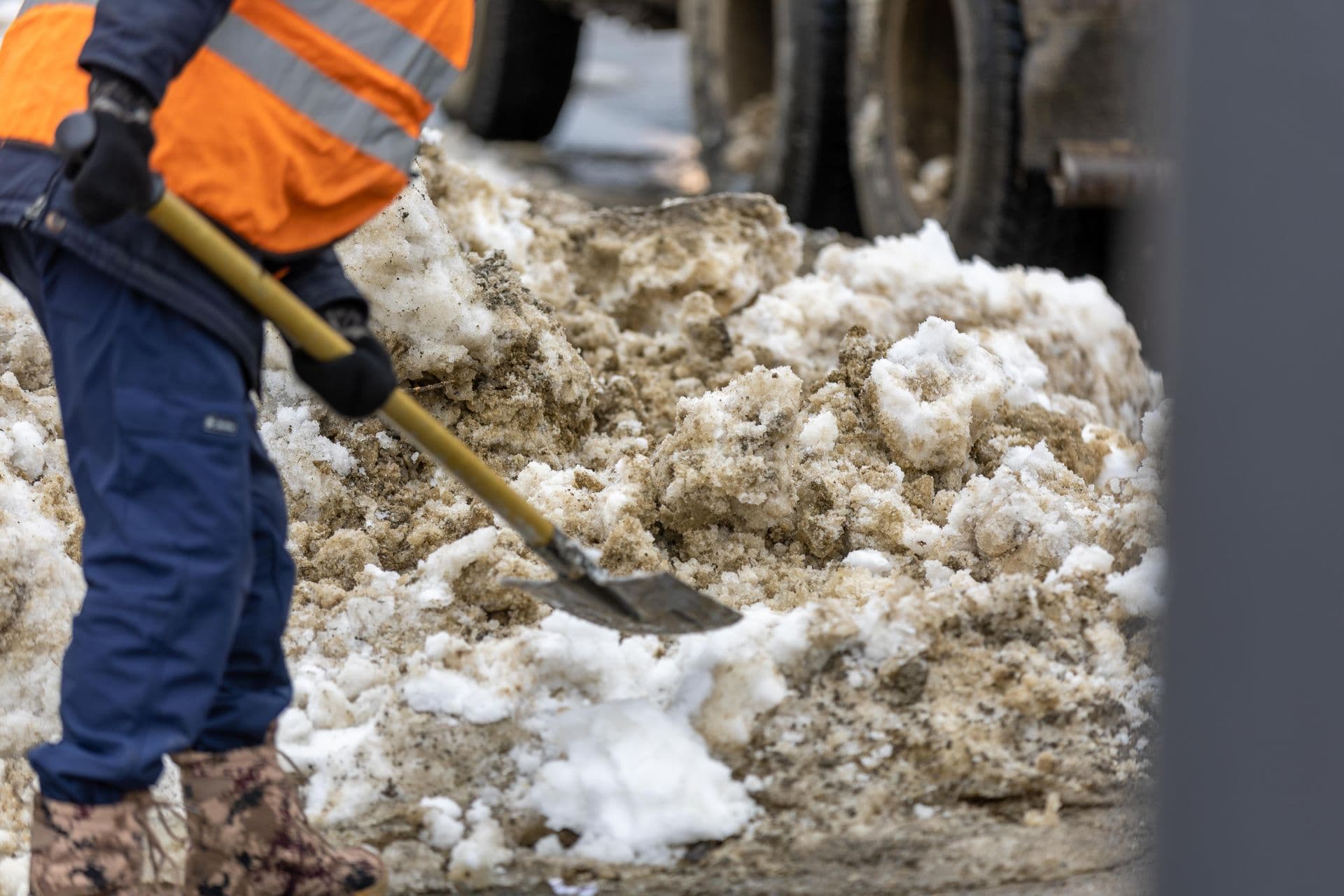
Every app looks good in a demo. The demo happens in a warm office, on wifi, with clean fingers and nothing at stake. A snow removal app gets used in the opposite conditions: gloves, darkness, a heater roaring, forty stops to go, and a driver who did not sign up for data entry. Whatever the feature list says, the real question is what the app does for the person in the cab at 3 AM.
This guide is our answer to "what's the best app for snow plowing?", written from the field backwards. It's naturally based on the SnowManager driver app, because we built it, but the checklist applies to whatever you evaluate.
Table of Contents
- Work arrives as an invitation, not a rumour
- One screen for tonight
- Driving the route
- The check-in that does itself
- Photos, notes, and the stop that couldn't be done
- Shifts and hours
- Messages and announcements
- When the driver is the dispatcher
- Conclusion and next steps
Work Arrives as an Invitation, Not a Rumour
In a phone-and-text operation, work arrives as a call the driver may or may not have heard over the engine. In a proper app, the office dispatches a route and every driver on it gets a push notification and an invitation: what route, when it's planned, what work type, who else is on it, and the note from the dispatcher.
The important part is the answer. The driver presses Accept and the dispatch moves into their active list, or Decline and the office sees it immediately, next to their name, while there is still time to re-crew the route. Silence is the enemy on a storm night; an explicit yes or no, minutes after dispatch, is what lets the office re-plan at 1 AM instead of discovering a hole at 6 AM. If every driver on a route declines, the dispatcher gets a warning that the route has nobody, not a surprise in the morning.
One Screen for Tonight
Opening the app should answer one question: what am I doing right now? The Home screen carries today's date or the running shift timer, an Active tab with the dispatches that are yours (each card showing the route, planned time, work type, and how many stops are done out of how many), and an Invitations tab with whatever still needs an answer. When there's nothing waiting, it says so.
A filter matters more than it sounds: by default a driver sees their own work ("Just me"), but can switch to see everything the company has running, or one colleague's view. On a two-plow operation that's how the second driver checks whether the first one got the school done before doubling back.
Driving the Route
A dispatch opens as a map plus the stops in route order, each stop tagged the moment it has an outcome: Completed, Unable, or Removed. The screen refreshes itself every few seconds, so a stop a colleague finishes changes colour without anyone touching anything. Two crews on one route stop calling each other about who took which end.
Press Start and two things happen: the office sees the route running on the web, and the phone begins recording position for this dispatch. Navigation hands off to the map app the driver already trusts (Apple Maps or Google Maps) for the drive to the next open stop.
The Check-In That Does Itself
This is the feature that separates snow apps from generic to-do apps. Nobody taps "arrived" at 3 AM with gloves on, and nobody should have to.
In SnowManager, every address carries its drawn service areas, and those drawings double as a geozone. When the phone enters the drawn area (or comes within about 15 metres of it, to cover the truck parked at the kerb and normal GPS error), the stop's check-in time is stamped. When the phone has been outside the area for five minutes, the check-out is stamped. An address with no drawing yet falls back to a circle around its pin. The times land on the stop automatically, and they're the same times that later feed hourly billing and proof of service.
The one thing the driver must do is grant location permission properly (on iOS, that's Always Allow); the app explains why when it first asks. What is recorded and what it's used for is documented, which matters for driver trust: it records the drive, not the driver's weekend.
Field note: when you evaluate any plow app, ask exactly where the check-in time comes from. If the answer is "the driver taps a button", you will spend the season chasing missing taps, and your invoices will inherit the gaps.
Photos, Notes, and the Stop That Couldn't Be Done
Documentation has to be cheap enough to happen every time. At a stop, the driver records the outcome, takes photos in the app (attached to the stop, timestamped, no camera roll archaeology), and writes a note when reality demands one: the blocked gate, the parked car, the dumpster where the snow pile should go.
Two details worth having: an address can be flagged as requiring a photo, and the app tells the driver so while they're inside the area, not after they've left. And "Unable" is a first-class outcome, not a deleted stop, so the office sees exactly what didn't happen and why, while the customer conversation is still easy.
Shifts and Hours
Payroll shouldn't be a second data collection project. The driver starts a shift from Home when the night begins and ends it when it's over; the Hours tab lists finished shifts and their length. The office reviews and approves them, and a forgotten shift can be entered by hand afterwards. Hours stop being a Monday-morning negotiation.
Messages and Announcements
Storm communication has two shapes and the app needs both. A chat, between the office and drivers, one to one or in groups, that lives in the same app as the work, so "the message" and "the job" are never in two places. And announcements: one-way messages where only the sender can post, pinned to the top for every recipient, with a push notification. The night's plan, a road closure, a changed priority: one message, every driver, no thread of thumbs-up replies burying the next real question.
When the Driver Is the Dispatcher
In small operations, and in every operation at 4 AM, the person who decides to go is sometimes the person driving. A good app lets a driver start work without waiting for the office: pick one of your routes or a single address, choose the work type, set the time, add a note, dispatch. It shows up on the web like any other dispatch, so the office is informed rather than bypassed. Administrators get a fuller version of the same flow, including choosing the crew per route.
That single feature is the difference between "the app is how the office controls drivers" and "the app is how the work gets run", and drivers can tell which one they've been handed.
Conclusion and Next Steps
The best app for snow plowing is the one that still works with gloves on: invitations that get explicit answers, one screen that says what's next, check-ins that stamp themselves from GPS, photos attached to stops, shifts that log themselves into payroll, and communication in the same place as the work. Everything else is brochure material.
The SnowManager driver app ships with every plan, iOS and Android, and it's half of a bigger loop: what the crews record becomes proof of service and invoices without anyone retyping it. For where the app sits in the full stack, start with What Software Do Snow Plowing Companies Use?, and if you want to see the cab view for yourself, book a demo.