
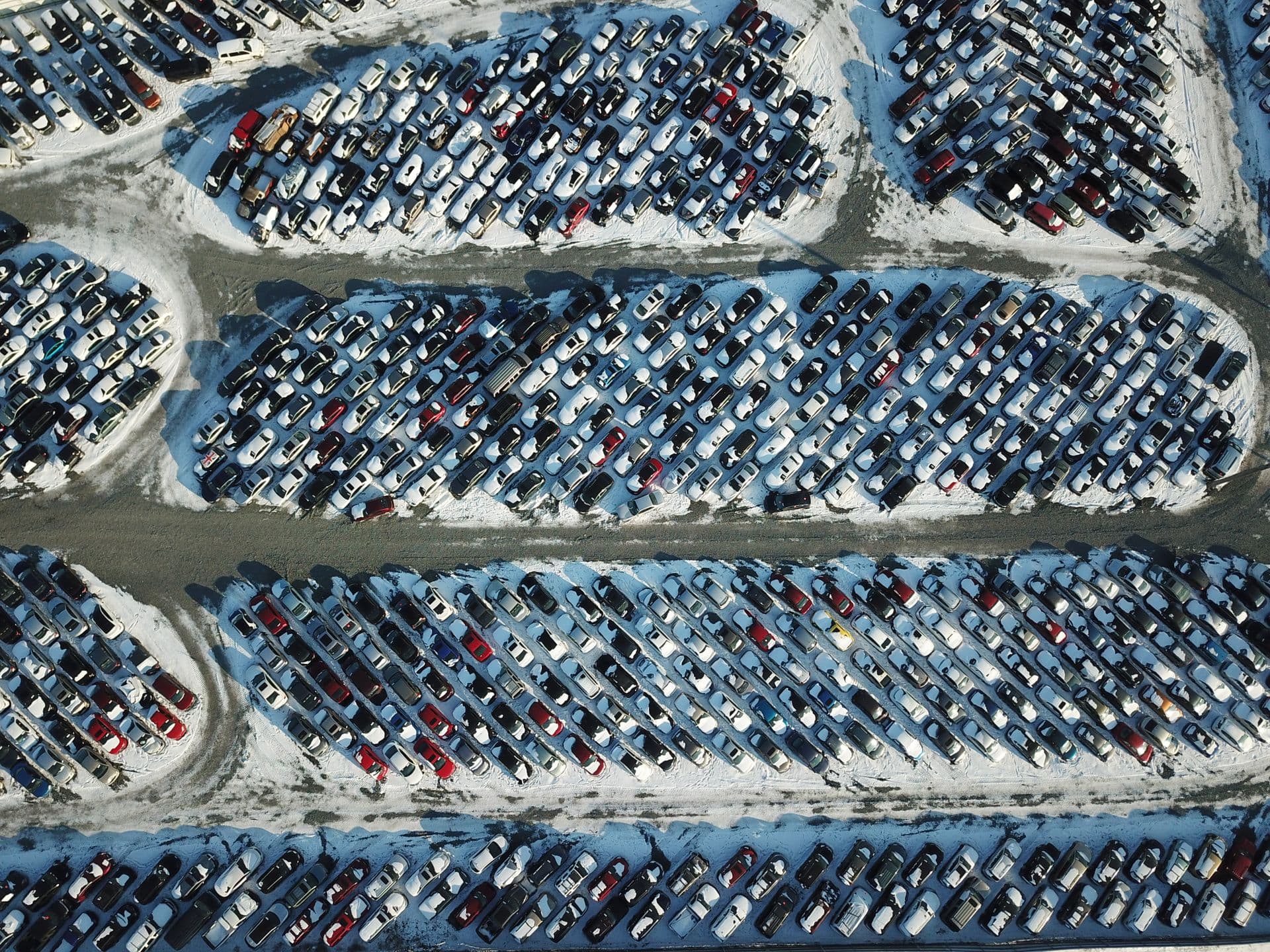
Two contractors bid the same retail park. The first walks it with a clipboard, eyeballs the lot, multiplies a gut feeling by last year's prices, and emails a number two weeks later. The second measures the property from a map in twenty minutes, prices it from a tier table their whole book uses, and sends a structured offer the same afternoon. Same property, same snow. One of them knows their margin before the first flake; the other finds out in April.
Bidding commercial snow plowing well is not about being cheap or brave. It's about measuring instead of guessing, pricing from a system instead of a mood, and putting terms in the contract that protect both sides in the 2 AM reality. Here's the method.
Table of Contents
- Start with the property, not the price
- Measure it by drawing it
- Price from tiers, not from vibes
- Choose the pricing model per site
- The contract terms that matter more than the price
- Send an offer, not an email
- Bid review: what April should teach October
- Conclusion and next steps
Start With the Property, Not the Price
Every bad winter contract starts the same way: the price was quoted before the property was understood. Before any number, you need answers per site:
- What exactly gets cleared and salted? The car park, yes, but which entrances, which walkways, which loading bays? Where's the line between your responsibility and the neighbour's?
- Where does the snow go? A lot with room to push is a different job from a lot that needs snow relocated after every major event.
- When must it be done? Cleared before 06:00 for shift change is a night-window job with real capacity cost. "Sometime that morning" is not.
- What are the risk zones? The slope to the underground garage, the shaded walkway that ices at noon, the pedestrian entrance where a slip-and-fall claim would land.
- Access realities: height barriers, gates, keycodes, the skip that lives where your plow wants to turn.
A site walk with the property manager answers these and, walked well, wins the job before pricing does: the contractor asking about snow relocation and the icy northeast corner sounds like a professional; the one who asks for square footage sounds like a lottery ticket.
Measure It by Drawing It
The measuring step is where modern snow bidding software changed the game. Instead of pacing the lot, you draw it: outline the areas to plow, the paths to salt, the entrances to keep clear, directly on the map, each area tagged with its work type. The square metres fall out of the drawings.
This does three jobs at once. The measurement prices the bid. The same drawings become the driver's job description on night one, so "clear the car park" means the same thing to the estimator, the crew, and the customer. And, as covered in our GPS tracking guide, the drawn areas become the geozone that later proves the work happened. One twenty-minute drawing session, three seasons of payoff.
While you're drawing, estimate completion time per site. You'll need it for route capacity later, and quoting a site you can't fit into your storm-night capacity isn't winning work, it's buying a breach of contract.
Price From Tiers, Not From Vibes
Per-property gut pricing has two failure modes: inconsistency (two similar lots at wildly different rates, and customers do talk to each other) and unscalability (every bid needs the person with the gut). The fix is a default price table: for each work type, area tiers with a rate per square metre. From 0 to 500 square metres, one rate; from 500 to 2,000, a better one; large-site tiers beyond.
A worked example: a 1,240 square metre property falls in your 500-to-2,000 plowing tier at, say, 10.20 per square metre per visit; that's the plowing line. Salting the same yard is its own line at its own tier. The totals come out per work type, per visit, from the drawn areas, and the whole book prices consistently: adjust a tier once and every open offer re-estimates.
Tiers encode the real economics: cost per square metre falls with size (travel and setup amortise over more area), and different work types have genuinely different cost structures (salting is fast and material-heavy; clearing is slow and machine-heavy). Your tier values are yours: derive them from last season's actual times per site, your machine costs, and your night-labour rates, and revisit them annually.
Choose the Pricing Model Per Site
The tier table gives you the per-visit price; the contract decides how it's charged. The four models, and when to offer which, in short (the billing mechanics behind them are in our billing software guide):
- Per visit: transparent, fair in variable winters; offer it to customers who trust documentation, and document relentlessly.
- Seasonal fixed: predictable budgets, loved by property managers; price it on your long-term average winter plus a margin for the bad years, never on last year alone.
- Hourly: for heavy relocation work, call-outs, and sites too irregular to standardise; requires automatic time recording or it becomes an argument generator.
- Hybrid: seasonal base for standard triggers plus per-event billing for extraordinary snowfalls; increasingly the norm for larger commercial sites, and the model that most needs software that understands which visit falls under which bucket.
Whichever model, put the trigger in writing: at what accumulation do you roll, and does salting ride on a different trigger than clearing?
The Contract Terms That Matter More Than the Price
April disputes are born in October omissions. Beyond price and trigger, the bid should state:
- Response and completion windows per priority level, and what "complete" means.
- Frequency caps: at most N visits per week or season under the base price, so the brutal winter has a defined overflow price instead of an argument. (Good software enforces these caps at dispatch time automatically; see scheduling.)
- Documentation: every visit logged with times and photos, available to the customer. Say it in the bid; it wins bids.
- Liability boundaries: what you're responsible for between visits, during active snowfall, and outside contracted hours. Align it with your insurer's language.
- Snow relocation: included events, or priced separately per event.
- Season definition and renewal: exact dates, and what happens to instalments if either side exits early.
Field note: the frequency cap plus a defined overflow rate is the single most protective clause for both sides. It converts the hundred-year winter from an existential threat into a priced scenario, and customers respect a bid that has obviously thought about the bad case.
Send an Offer, Not an Email
The last mile matters. A number in an email thread is haggling bait; a structured offer, with the property drawn, the areas and work types listed, the model and terms stated, reads as a system the customer is buying into. Sent digitally from your platform, the prospect's property sits in a pipeline (draft, sent, approved, declined) instead of in your inbox's memory, and the moment the customer approves, the address activates: ready for routes, dispatch and the drawings already made. Won deals start work without a re-entry step, and autumn's quoting sprint stays visible and manageable.
Bid Review: What April Should Teach October
The pricing system only compounds if you close the loop. After the season, compare per site: quoted time versus recorded time, visits assumed versus visits driven, margin planned versus margin real. Sites that consistently ran over are mispriced or mis-scoped; fix the tier, the drawing, or the terms. This is also the honest answer to "how do I know my tier values are right?": you don't, in year one. You know in year two, if you recorded year one.
Conclusion and Next Steps
Bidding commercial snow plowing comes down to a sequence: understand the site, draw and measure it, price it from tiers, pick the model that fits the customer, write the terms that survive 2 AM, and send an offer that starts work the moment it's approved. Do it with a system and every bid makes the next one better; do it by gut and every winter is a coin flip.
SnowManager's offer flow is this article in software form: draw the property, tier-price it per work type, send it, and let approval activate the site. Book a demo and bring a property you're bidding right now; we'll draw and price it live. For the wider context, start at the complete software guide.